


David Fincher interview: ‘AI isn’t going to hurt cinema’
David Fincher interview: ‘AI isn’t going to hurt cinema’

Robbie CollinSat, November 28, 2026 at 6:01 AM UTC
0
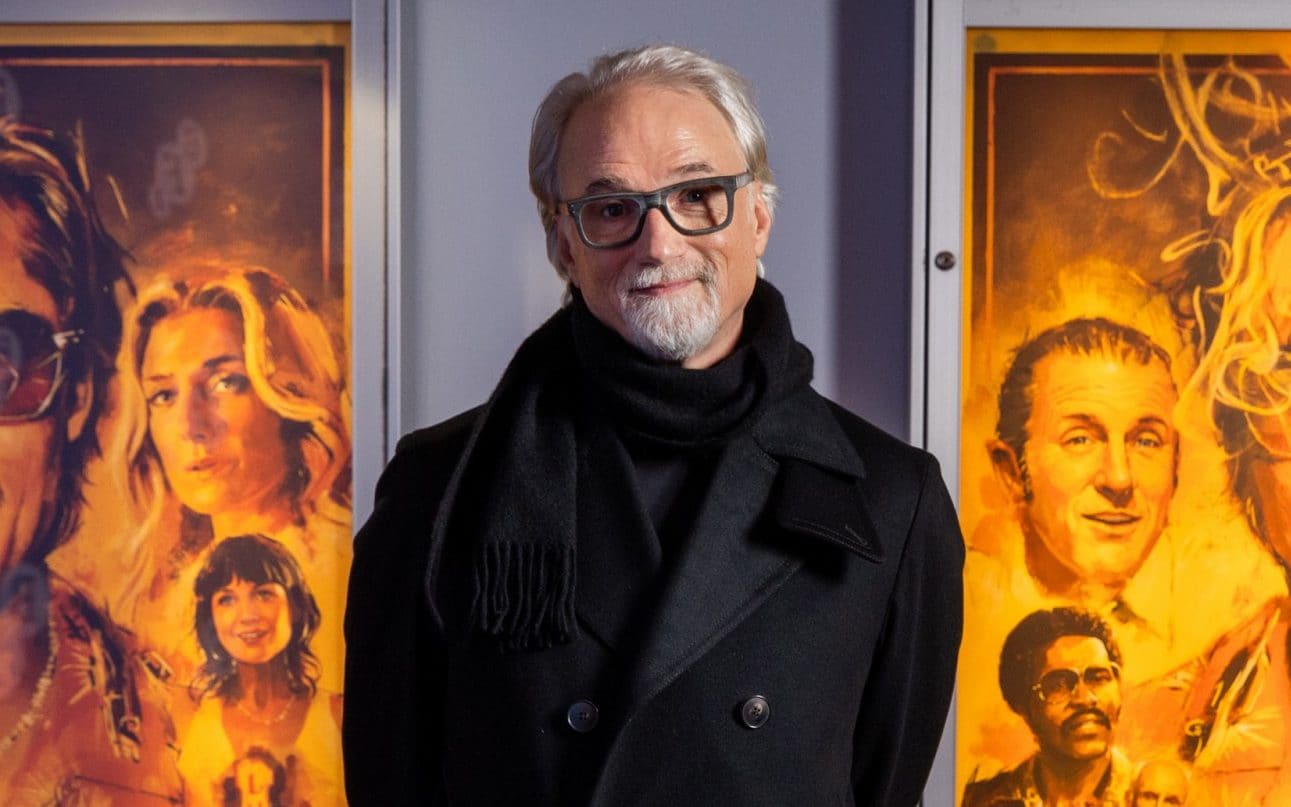
David Fincher’s new film, The Further Mis-Adventures Of Cliff Booth, has come under scrutiny over its use of artificial intelligence - Getty Images for BFI/Tristan Fewings
“The thing about wigs,” David Fincher explains, “is they haven’t changed in around 500 years. We are working with the same things on set today that Shakespeare was using at the Globe Theatre. So if I can now use AI to make an actor’s wig move like it’s their real hair when they’re driving a car with the wind in their face, of course I’m going to avail myself of that.”
The exacting 64-year-old film director has always been an early backer of technologies that his peers have taken considerably longer to accept. Zodiac, his 2007 serial-killer procedural, was one of the first major studio productions to be shot and finished digitally.
The Curious Case of Benjamin Button, released the following year, pushed facial performance capture and digital de-ageing to previously unimaginable levels of realism. And around 900 shots from 2014’s Gone Girl were laced with visual effects so invisibly subtle that a video comparing some of the more striking before-and-after shots went viral.
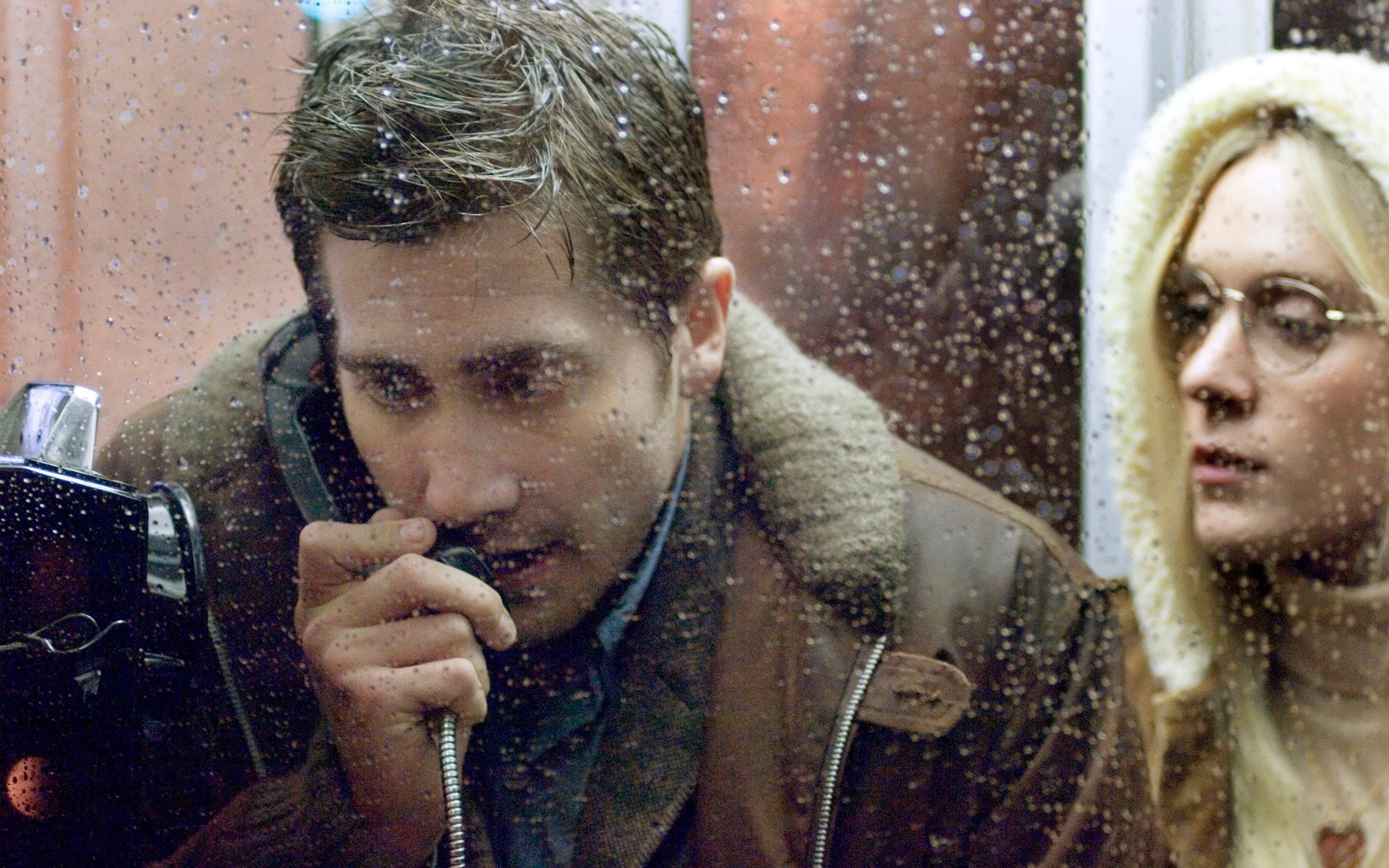
Zodiac (2007), starring Jake Gyllenhaal, was one of the first major studio productions to be shot and finished digitally - Warner Bros Pictures and Paramount Pictures/Merrick Morton
Yet Fincher now finds himself at odds with large swaths of the film industry over his enthusiasm for generative artificial intelligence – that new strain of software, which has learnt how lots of things, including hair, “should” look through the crunching of vast amounts of visual data, and can confer that correctness on to filmed footage wherever it falls short.
Through an iterative process (essentially, a discussion with the AI), filmmakers can now obtain exactly the look they want, with not a literal hair out of place, rather than having a team of VFX artists painstakingly animate the individual strands. For a director known for his steely perfectionism – during the making of his Netflix series Mindhunter, Fincher spent an entire day shooting a single scene 75 times – one can see the appeal.
The technology – and its implications for the Hollywood labour market – are highly controversial. Fears over its early adoption by the industry were a major factor in the actors’ and writers’ strikes of 2023. But for Fincher, it is merely the latest step in film’s ongoing evolution.
“I just don’t understand why people’s bowels are in an uproar,” he says. “So I’m choosing not to get into a discussion about how it’s hurting cinema. Because I don’t see it like that. I feel that cinema has to embrace technologies that support the audacity of the ideas that should be underpinning it. Technologies that enable you to do new things faster and easier allow you to take more risks in future.”
Other prominent filmmakers, including Martin Scorsese, Ridley Scott, James Cameron and Danny Boyle, have given AI tentative endorsements. But what Fincher is telling me – while sitting on a sofa in Claridge’s in London – is the most robust, persuasive defence of it that a significant director has made.
What’s more, he has chosen an opportune moment to make it, since his latest film feels as tactile, handmade and stylish as, well, something from the 1970s. The Further Mis-Adventures of Cliff Booth is the unlikeliest film of Fincher’s career. A sequel of sorts to Quentin Tarantino’s 2019 hit Once Upon a Time… in Hollywood, it was written by Tarantino, whose script was passed to Fincher via the directors’ mutual friend (and star of both films) Brad Pitt.
Set in 1977, it follows Pitt’s retired stuntman Cliff as he carries out a string of shady and dangerous odd jobs for movie types around Los Angeles. It’s no moony love letter to Hollywood, but a feverish LA underworld picaresque, with sweat trickling down its back and bloodstains on its jeans. In a nod to the 1975 Hal Ashby classic starring Warren Beatty as a priapic hair stylist, Fincher describes it, with evident amusement, as “Shampoo with violence. It’s about the f---ing weirdos that you meet when you move to Los Angeles”.
Fincher ended up cutting 60 pages of material from Tarantino’s script and grilled the Pulp Fiction maestro on the mechanisms underpinning individual sentences throughout the 170 pages that remained. Did he think Tarantino responded well to his cuts and quibbles? “Listen,” he shoots back, “if I’d had the support that I had from Quentin on this film on Alien 3” – Fincher’s first feature, on which the studio shot down his ideas at every opportunity – “that would have been a very different movie. Besides, if Quentin writes a script, you can’t beat the Quentin out of it with a tyre iron.” He twinkles subtly. “And nor would I want to.”
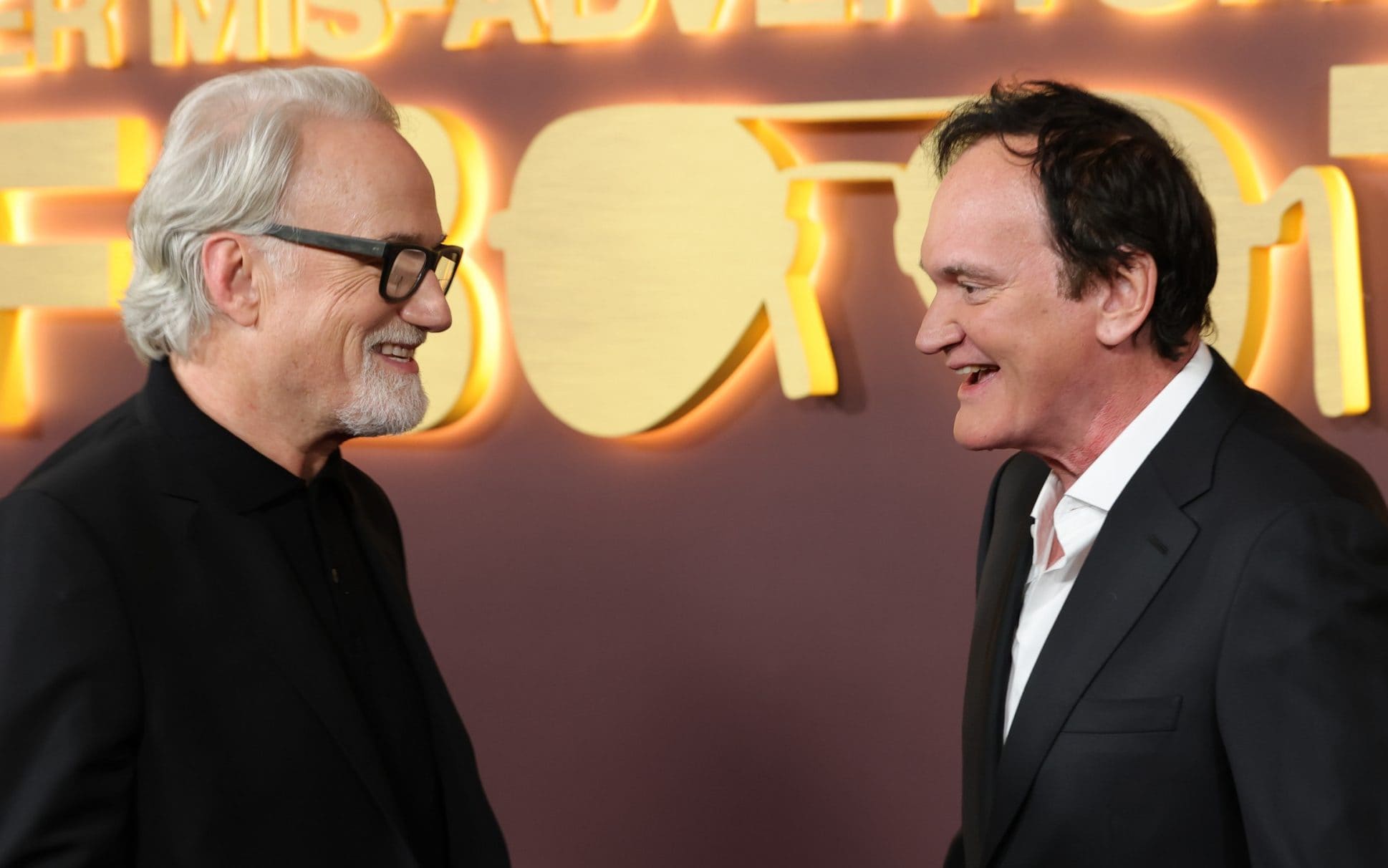
Fincher and Quentin Tarantino, who worked together on The Further Mis-Adventures of Cliff Booth, are both known for depicting violence in their films - Getty Images/Frazer Harrison
It’s an interesting choice of words. While both Fincher and Tarantino are well known for their uncompromising depictions of violence, the two directors have always taken a wildly different approach to the subject: the merry musically accompanied ear-slicing of Reservoir Dogs has little in common with the coolly implicit depravity of Seven’s notorious “What’s in the box?” scene.
“Not that I was trying to teach Quentin a lesson with this,” Fincher smiles, “but it’s fair to say that on this point we philosophically differ.” He brings up an early scene in which two Filipino hitmen break into a family home and murder its inhabitants: the sequence feels cosily Tarantino-esque at first, but by the end it has frozen your blood in vintage Fincher style.
“With Quentin, there’s a playful sadism, but the first impression that I wanted to make was that these guys are utterly efficient psychopaths. My relationship to violence in movies has always been that I want it to be something you have to endure. I feel like violence has to exact a toll on the viewer. That if we are not going ‘wow’” – he drops his jaw in a pantomime of uncomprehending horror – “we’re doing ourselves a disservice.
“I like Die Hard, but the amount of damage to his person that Bruce Willis muscles his way through in that movie to me essentially says, ‘None of this is real.’”
Does he see Cliff Booth as a Tarantino film, or a Fincher one? “Oh, it’s one of mine,” he says airily, before pointing out that he has never written his own films and has no plans to start soon. “I come from hardy writer stock” – his late father, Jack, who wrote his 2020 film Mank, a noirish drama about the making of Citizen Kane, was a veteran journalist at Life magazine. “But I’ve seen what it takes to practise that craft, and I don’t want any part of it. My skills are three-dimensional. I’m working in a form of communication, choosing actors who can bring a certain something to their character, then working out how to unleash certain useful aspects of that, and pounding others into submission.”
Little pounding was required when it came to Pitt, with whom Fincher has now made four films, and who in Cliff Booth was returning to a beloved role that had won him an Oscar in 2020. He and Fincher have been firm friends since making Seven in the mid-1990s. Pitt, then a tousled heartthrob, was a less-than-obvious choice to play detective David Mills, though after the role was turned down by Denzel Washington, Fincher took a different tack, and saw in Pitt a natural relatability and pathos that he could weaponise.
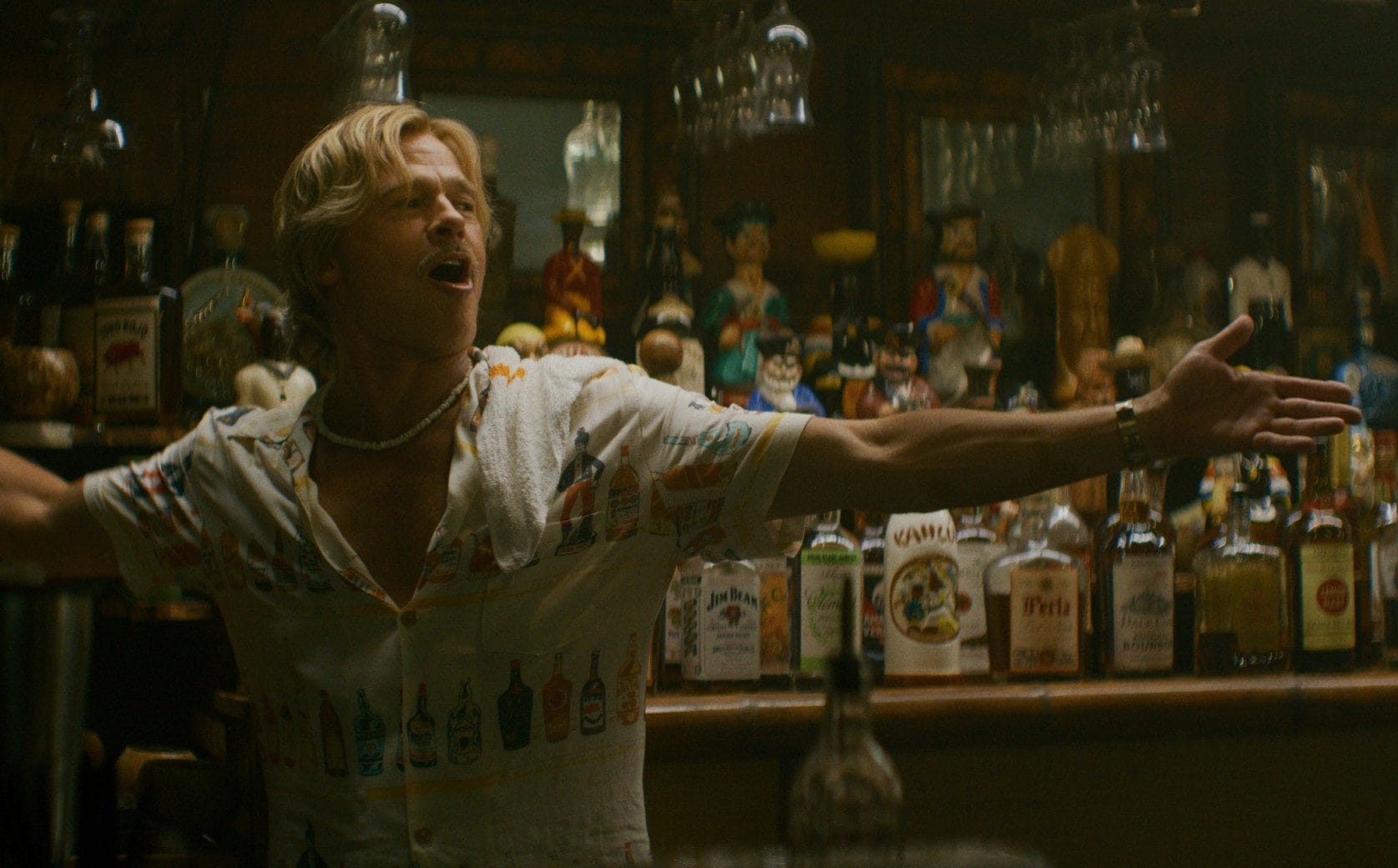
Pitt, who brought Tarantino’s script to Fincher, has now made four films with the latter director - Netflix
Throughout the filming of Once Upon a Time… in Hollywood, Pitt privately fretted to Fincher that the film wasn’t working – or at least, that he wasn’t working in it. “I saw him two or three times a week during that period, and he felt adrift – that whatever he was trying to do wasn’t working. He didn’t want to just mimic Steve McQueen or [stuntman] Buddy Joe Hooker, but he had a list of names he was pulling from, and as he was doing so he couldn’t figure out his place in the movie. Then I saw it and I was like, ‘Whatever you were doing, it worked.’”
On a first viewing, Fincher ranked the film “somewhere in the high middle in Quentin’s filmography”. But he went back to it before directing Cliff Booth – watching it 16 more times, including six times in as many days, “trying to work out what people were getting from it, and what Quentin was infusing”. He now believes it’s “up there with his very best”.
Advertisement
“It’s easy to write off its appeal to nostalgia,” he says. “But there’s a real longing that sits beneath it – perhaps a longing for a certain kind of male character that we no longer see on screen or off it.
“There’s a stoicism to Cliff and Rick [Dalton, the TV star played by Leonardo DiCaprio for whom Cliff works], but also real emotion. Rick is highly emotionally pliant as he tries to negotiate a world that he’s becoming more useless to, and sitting alongside him driving the car is a guy whose usefulness to him is also diminishing. So there’s more sorrow and loss in it than people immediately latched on to.”
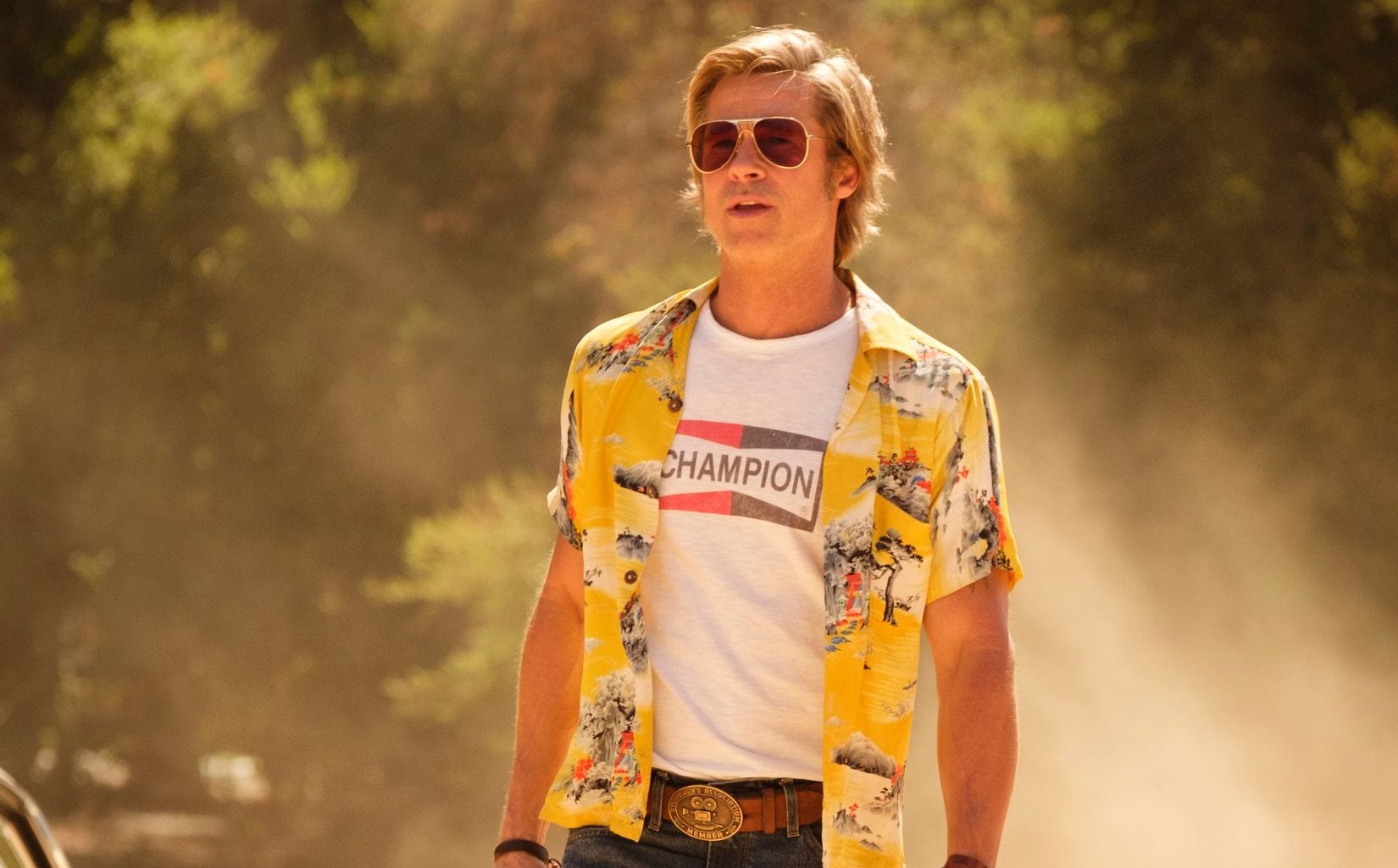
Pitt’s performance as Cliff Booth in Once Upon a Time… in Hollywood won him an Oscar in 2020 - Sony Pictures/Andrew Cooper
Has Pitt changed since Fincher last directed him in 2008 (in Benjamin Button)? “I think he’s a lot freer now. There were a number of years in which he bristled at the effect of his involvement in any film he made, because he wanted to be an actor, and people saw him as a movie star. And he’s bright enough to understand that the latter category is not something you can opt out of or into. It’s for the rest of the world to decide.”
The new film’s 1977 setting prompted Fincher to use anamorphic lenses – devices that came to prominence in the 1950s and “squeeze” the image in ways that create distinctive optical signatures and distortions that can give a film an almost subliminally vintage flavour. But the chance to play around with far more recent innovations – including AI – also excited him. When this contentious subject comes up, Fincher admits to a certain wariness: the various misapprehensions about what AI can and can’t be used for makes public debate feel like “running in quicksand”.
But using the technology to make wigs indistinguishable from natural hair is, to him, a no-brainer – as is using it to adjust actors’ eye lines when they look slightly off. “I’m fixing things you may never be aware of,” he says.
What’s more, he explains, all of his actors underwent full-body scans to create digital doubles that could be dropped into any given scene. These are used in one of the film’s most beautiful sequences: a tracking shot that follows Pitt and co-star Scott Caan as they walk along the beach. Astonishingly, neither actor was actually there. “We didn’t have them available when we were shooting that sequence, so we shot the background without them, put them into a surface scan, and captured their gait as they walked down the beach, and then were able to add them in behind the lens flares and all of that stuff.”
You would genuinely never guess that the scene was anything but what it looks like, though Fincher compares it to the equally fastidious Stanley Kubrick shooting Tom Cruise on a treadmill for Eyes Wide Shut in front of a projected image of a New York street, rather than having the actor walk around outdoors and then deal with the lighting issues and possible disruption it would have entailed.
“What Kubrick was doing was a 1928 technique,” Fincher says. “This is just the 2026 version of the same thing.”
He also bridles at the widespread suggestion that the use of AI necessarily reduces human artistry and input. “I’m the guy who won’t let Darius Khondji set the camera for me on Seven,” he snorts, referring to his Oscar-nominated cinematographer on that film. “Do you think that I would turn over the purview of where the camera is supposed to be and what’s happening in front of it to a laptop? It’s not going to happen.”
Fincher is well placed to make this argument because, as he says, he “paid his dues” in the visual-effects trenches in the days before AI. “When I did Benjamin Button, I spent three years and more than $35m taking Brad’s performance, ageing his face and putting it on another person’s body.
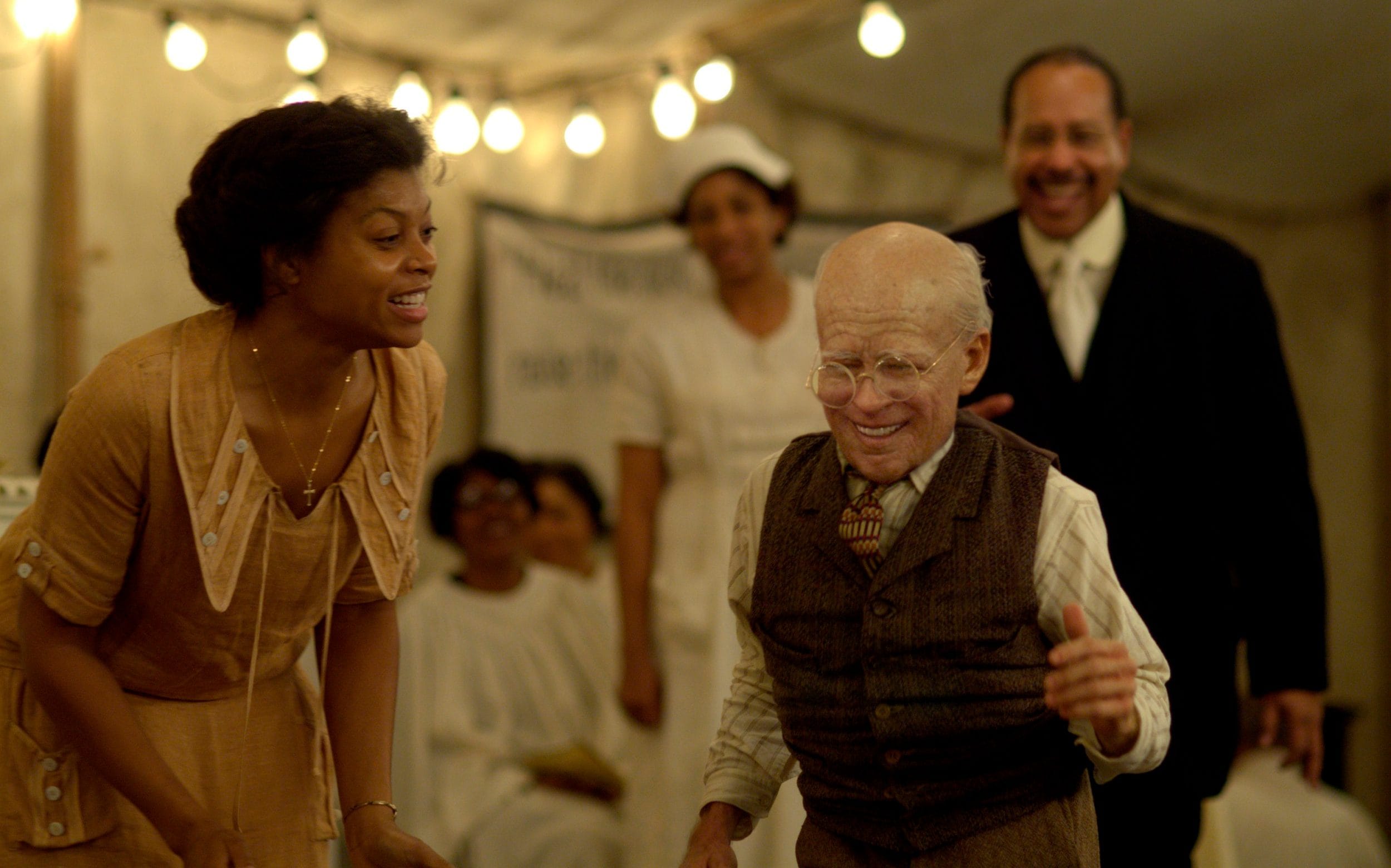
Fincher ‘spent three years and more than $35m taking Brad’s performance and putting it on another person’s body’ for The Curious Case of Benjamin Button - Merrick Morton
“Now I have a technology that allows me to take a 49-year-old actor and then erase the wrinkles in his face and change the size of his ears and nose in order to create the illusion that the performance he’s giving was recorded when he was 24.” (Here he’s referring to Caan, whose Charlie Peters we see at various ages in a highly plausible career highlights reel, narrated by Tarantino himself.)
“But there are no sliders that allow me to change performance. The behaviour is sacred. And on Benjamin Button the process was a hell of a lot harder and, in all honesty, much more opaque. For people who have decided they hate AI, those earlier techniques should have been a moral transgression.”
He likens the resistance to the similar scepticism around digital cinematography in the early 2000s, which eventually subsided as more artists got their heads around its potential.
“I had conversations with [cinematographers] Allen Daviau and Caleb Deschanel and Roger Deakins for years, and they said, ‘I don’t want to shoot digitally, because I need to look through the camera and see the light fall on the actors, then bounce off a rotating mirror to my ground glass, so I can assess it the way I’ve always assessed it.’ I’d reply, ‘OK. You’re Roger Deakins. You get to do whatever you want.’ But the fact he doesn’t work that way anymore says to me that there was another imperative that outweighed that.”
The AI panic, Fincher says, is also only one component of an industry that seems to be averting crises everywhere, from studio mergers to the ever-deepening global content swamp, from which few individual films and shows ever manage to extricate themselves.
As a pivotal figure in Netflix’s early success – it was his 2013 series House of Cards, with Kevin Spacey, that made it a must-subscribe service – Fincher is partly responsible for this new entertainment landscape. Yet as his 13-year alliance with the platform comes to an end (Cliff Booth is his last project for Netflix), does he think it’s changed the industry for the better?
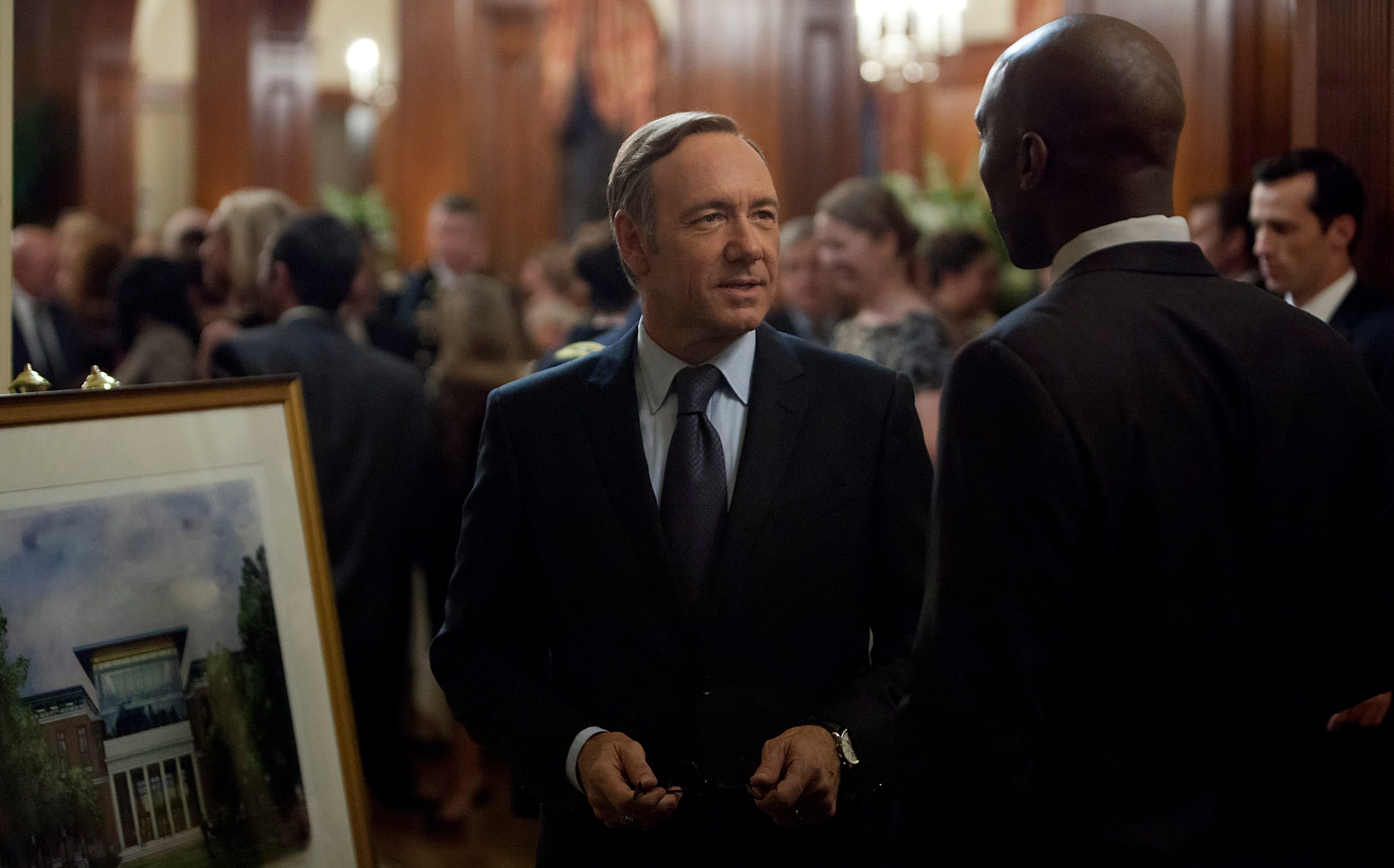
Fincher’s 2013 series House of Cards, starring Kevin Spacey, helped make Netflix a must-subscribe service - Netflix
The algorithms give him pause: “The audience today is sitting open-mouthed in front of a fire hydrant that is spraying 3,000 possibilities for entertaining themselves into their face based on their own previously expressed preferences,” he says. “So to change a movie or show’s status from ‘this sounds interesting’ to ‘must-see’ is now almost impossible. But it’s also created opportunities for people to break out in unexpected ways.”
How will Paramount’s recent $110bn buyout of Warner Bros change things? “When I came to Hollywood in 1984 as a young man intent on selling my wares to the studio system, it was fairly clear where the opportunities were,” he says. “And now that’s not clear at all. You no longer know who’s about to be subsumed by whom. It’s becoming a free-for-all.”
Doom and gloom, gloom and doom? On the contrary: as in a Fincher film, the darkness serves as a stage on which brilliance can be better spotlit. “I’m the kind of person who thinks chaos is interesting,” he grins. “Wherever there’s chaos, there’s realignment. Chaos forces you to prioritise what matters.”
The Further Mis-Adventures of Cliff Booth is playing in Imax cinemas from Nov 27 and will launch on Netflix on Wednesday Dec 23
Source: “AOL Entertainment”
