


Nvidia and Musk's robotic big bets will test Anthropic's latest projections
Nvidia and Musk's robotic big bets will test Anthropic's latest projections

Hamza ShabanFri, October 2, 2026 at 9:56 AM UTC
0
The overlords of the AI world seem to agree on the need for self-policing. Whether that consensus of rivals comes from genuine concern for humanity's well-being or common financial motives is open for discussion.
What tech leaders don't agree on is when AI-infused robots will massively displace human workers. The vastly different timelines for when humanoid robots will become mainstream are among the most interesting AI debates that aren't about safety and place major players in open disagreement.
A new study from the AI company Anthropic (ANTH.PVT) suggests blue-collar workers have decades before robots take their jobs. While that stretched time horizon is still unsettling, it offers some comfort for workers and the breathing room for collective action in the private sector and through public policy. The robot flood is coming, the study seems to say, but in more time than you think.
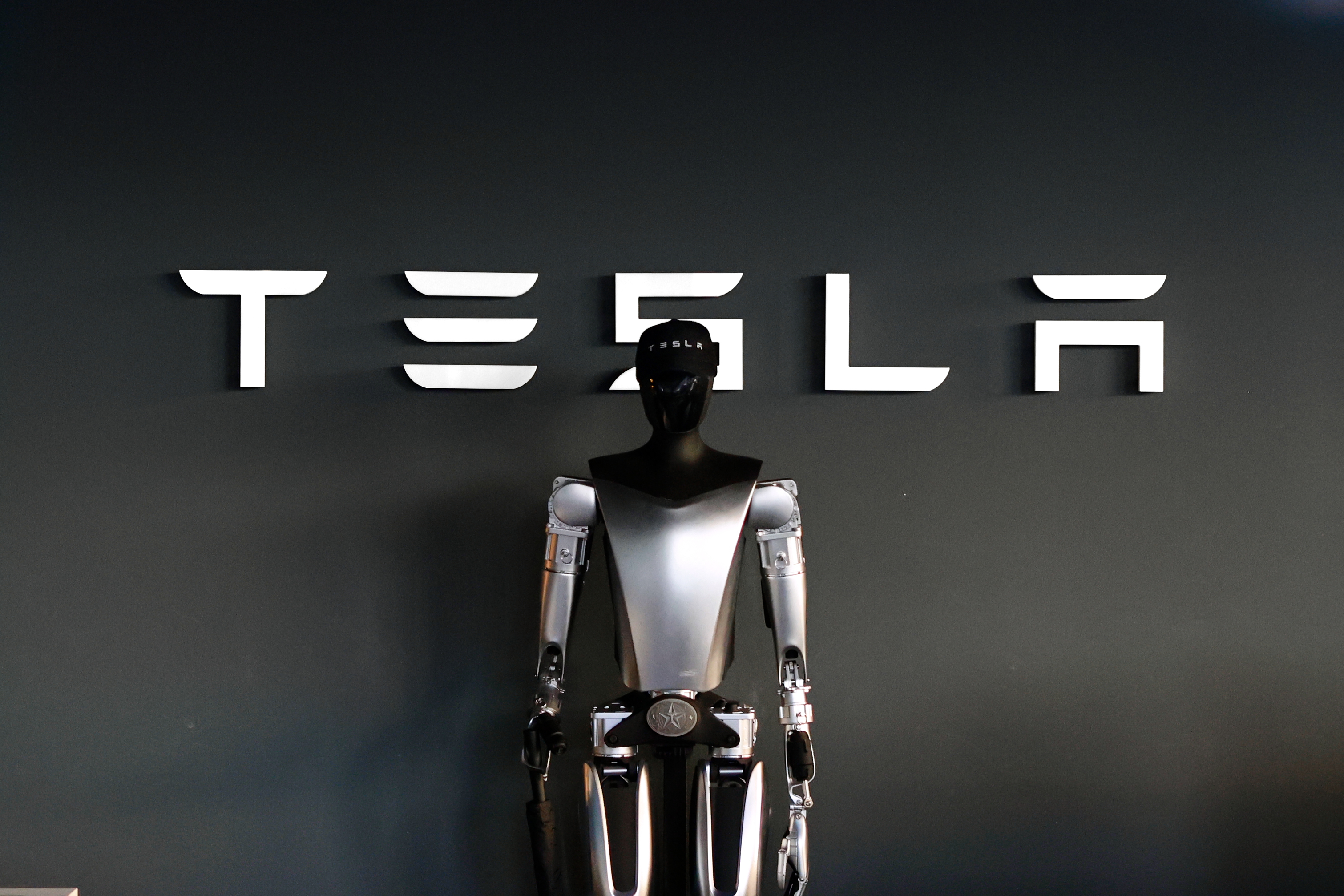
A Tesla Optimus humanoid robot is displayed at a Tesla store in Zurich, Switzerland, on September 10, 2026. (Joan Cros/NurPhoto via Getty Images)
That analysis clashes with the more AI-bullish scenarios that foresee the rapid uptake of robots in households and factories, fueled by a rapidly diminishing cost to build them.
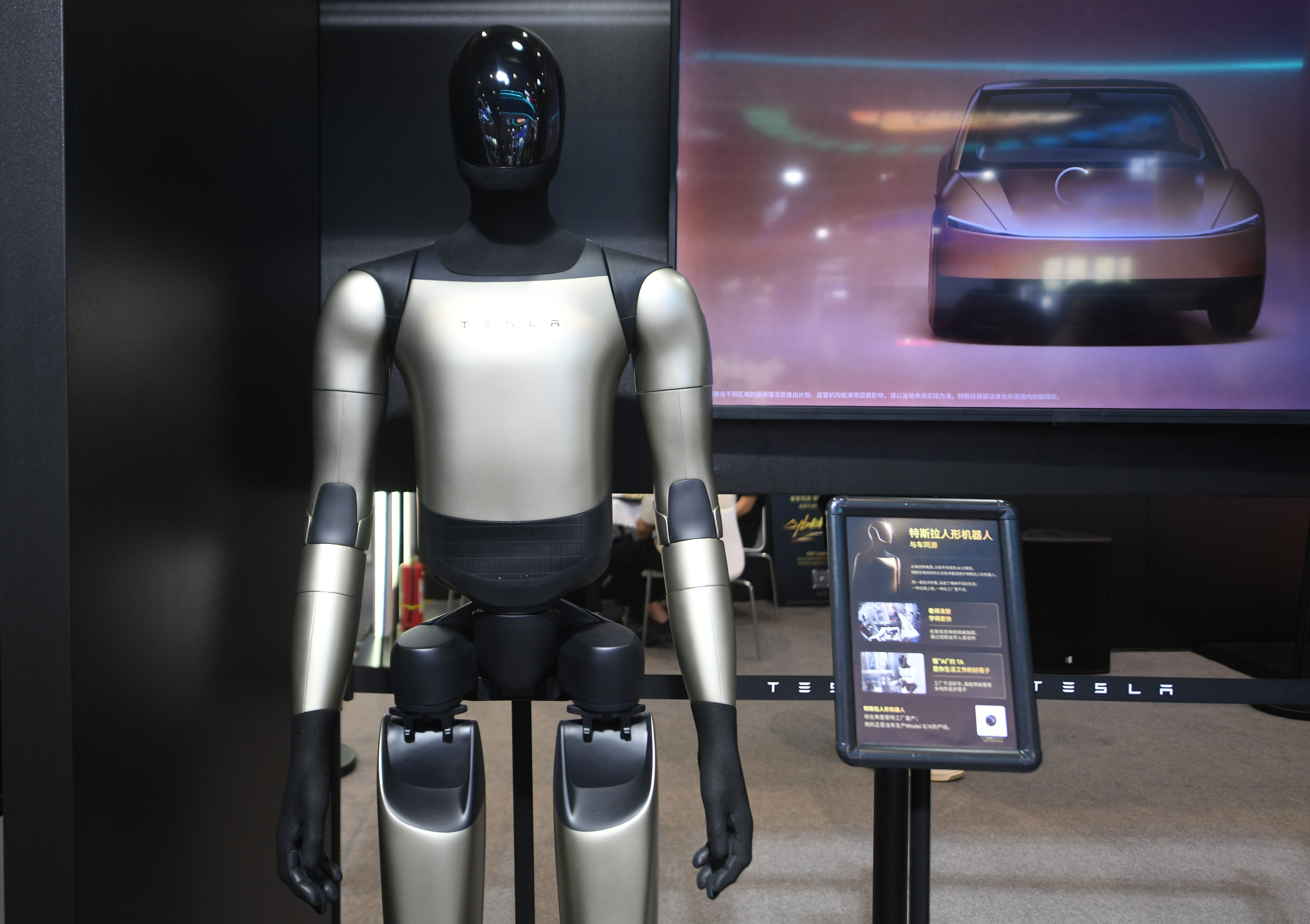
At CES in January 2026, for instance, Nvidia (NVDA) CEO Jensen Huang predicted a coming "ChatGPT moment" for robotics in the form of agents, self-driving cars, and humanoid robots. And Tesla CEO Elon Musk is racing to establish a commercial beachhead for embodied AI with the company's Optimus robot. Musk has said Optimus will go on sale as early as next year, and envisions a future where every household has a robot.
A Morgan Stanley research report from 2025 forecasts that the market for humanoid robots could surpass $5 trillion by 2050. Adoption of humanoids, the report states, is likely to accelerate in the late 2030s with improved tech, a friendlier regulatory environment, and popular support.
Not so fast, the Anthropic report suggests. If the prices of robots declines following past trends, it will take 40 years for robots to replace just 10% of job tasks, according to the report. "Beyond price, factors including capabilities, preferences, and regulations pose further barriers to robot automation."
Advertisement
Other experts have echoed Anthropic's takeaway. Apollo chief economist Torsten Sløk wrote in a note highlighting the paper that "even under aggressive projections, widespread physical labor displacement will take decades." (Disclosure: Yahoo is a portfolio company of funds managed by affiliates of Apollo Global Management.)
The disparity of timelines underscores another point of tension between the rapid pace of software development and the slow progress of hardware. Full integration in the digital world — menus and interfaces, screens and apps — has unfolded in a totally different way than hardware products. That it took several years after the debut of ChatGPT for Meta to put out the first Big Tech-backed AI "holdable" is a testament to that.
The cost and adoption of solar panels or TVs might provide an interesting counter-example.
Backers of a faster humanoid robot rollout might point to mass production in those categories as proof that timelines can rapidly accelerate given the right technology and economics. But the cost of tech-stacked cars and AI-capable smartphones has moved sharply in the other direction.
Will robots be closer to commoditized gadgets or premium products with constrained supply? That they are a completely new product category adds to the uncertainty. If AI-powered hardware is even a fraction as hotly debated and politically charged as AI chatbots and agents are, the cost of producing them won't be the only bottleneck to mass adoption.
Hamza Shaban is a reporter for Yahoo Finance covering markets and the economy. Follow Hamza on X @hshaban.
Click here for the latest technology news that will impact the stock market
Read the latest financial and business news from Yahoo Finance
Source: “AOL Money”
