


Set dressing is a thankless task, but British TV does it best
Set dressing is a thankless task, but British TV does it best

Gareth RobertsSat, November 28, 2026 at 7:01 AM UTC
0
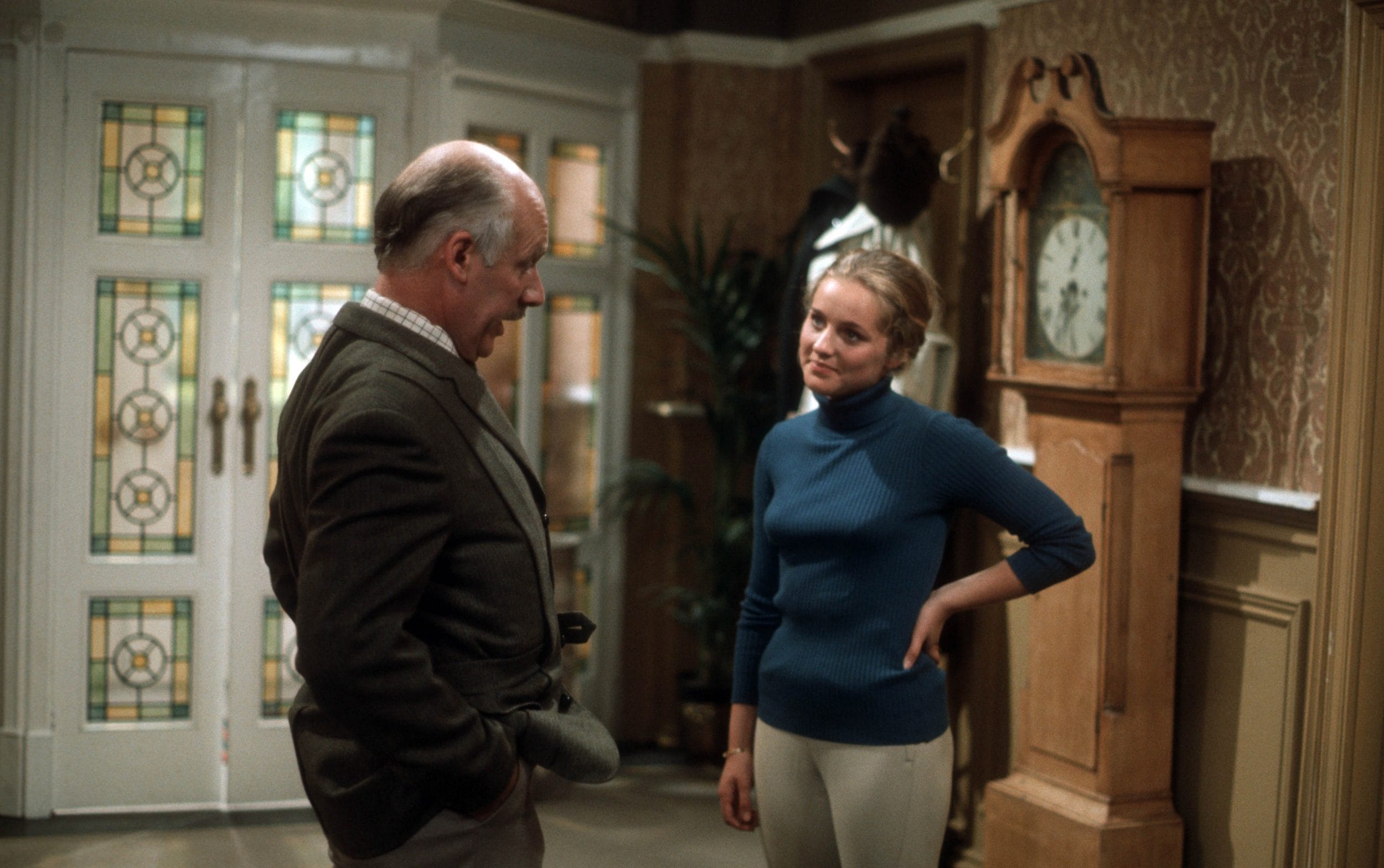
Emmerdale Farm, which debuted in 1972, would go on to be filmed on Europe’s biggest set for a soap opera - ITV/Shutterstock
In the list of thankless jobs – the kind that people notice only when they are not done properly – television set dresser must come pretty high up. A set dresser’s task is to source, select and arrange the background bibelots and bric-à-brac that support the scenes being played upfront.
Across the country there are huge vaults full of this stuff – Set-A-Side Storage near Oxford is a veritable Aladdin’s cave of familiar items from big shows such as Britain’s Got Talent and The Apprentice, while Cama AssetStore has a whole string of warehouses bursting with every kind of trinket. If you need a fashionable 1865 teapot, or a stack of grotty chairs for a political meeting in 1926, they will have it.
TV set dressing is a talent Britain can be particularly proud of. The Americans may have now caught up with us, but there certainly used to be a distinct superiority in the field on this side of the Atlantic. Compare the sets of 20th-century productions, and you will notice how far ahead we were. The dressing in 1960s American big hitters such as Mission: Impossible and Perry Mason – particularly in their bespoke, story-of-the-week sets – often looks pristine, studio-phoney and empty. Even as a child, I remember noting that the cabins aboard the original Starship Enterprise didn’t feel like lived-in environments.

Considering the crew was on a five-year mission, the interior of the Enterprise always looked remarkably spotless in Star Trek (1966-69) - Sunset Boulevard/Corbis via Getty
I think this was American TV picking up the habits of the shiny, larger-than-life grandeur of early Hollywood, of making things look bigger and better than real life. There’s not an enormous distance between the spectacular unreality of the enormous Manhattan depicted in 1955’s Guys and Dolls and Captain Kirk’s quarters. We British, true to our national character and our more limited resources, always tended to emphasise dirt and detail, even in similarly glossy or fantastic worlds. The set dressing of near-future glamour in Gerry and Sylvia Anderson’s UFO, for example, or their follow-up, Space: 1999, is full of fussy clutter and technically unnecessary bits and bobs. The habit of British productions has always been to complicate, to give a sense of lives lived before and after.
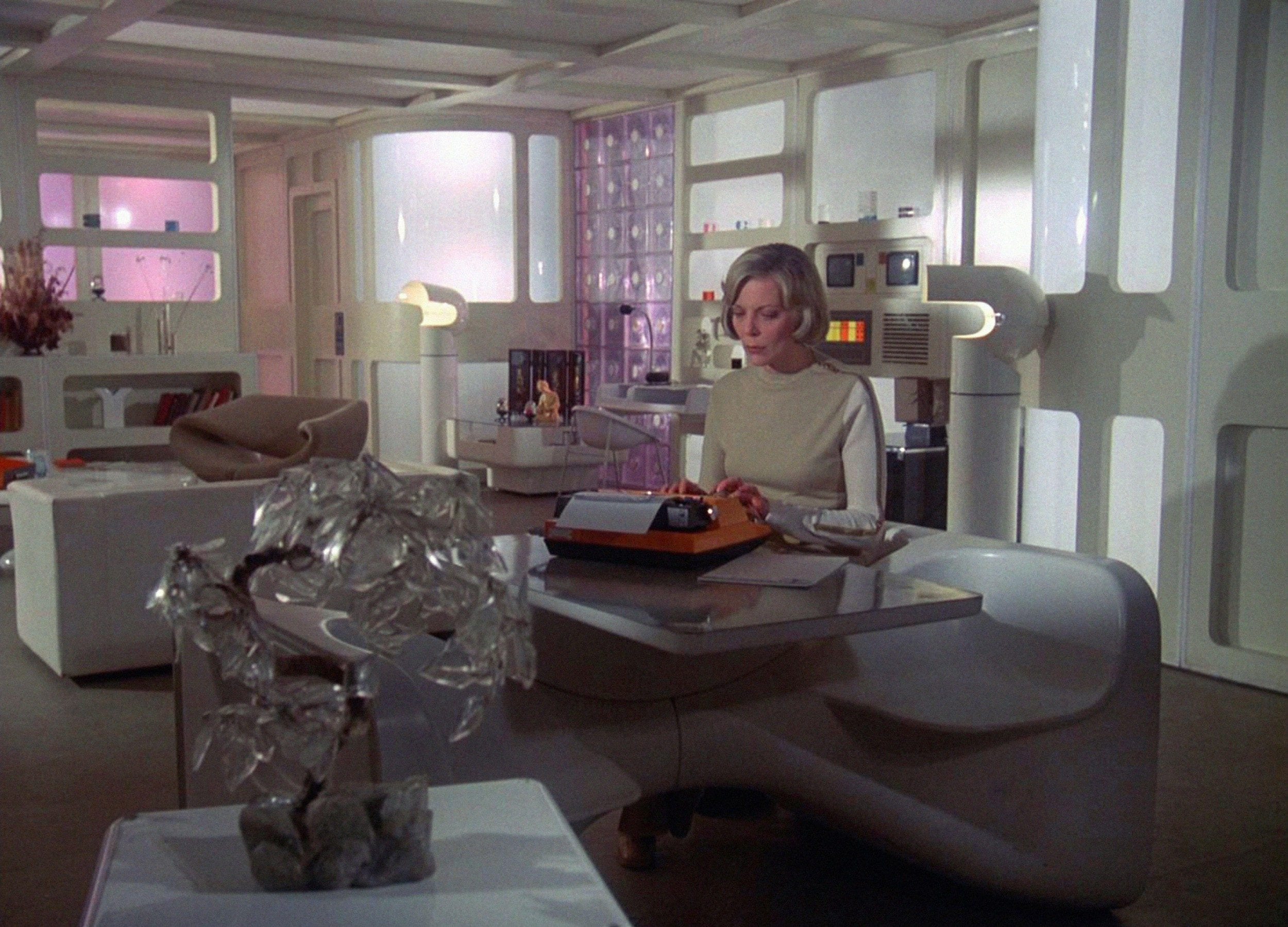
In the British show Space: 1999 (1975-77), near-future glamour was presented with more clutter. (Pictured: Barbara Bain as Dr Helena Russell) - TCD/Prod.DB/Alamy
A well-dressed set serves as an anchor for any production. As technology made shooting at real locations more practical, standing studio sets simply had to match their reality. It comes as a jolt, for example, to realise that the interior of Tony and Carmela’s residence in The Sopranos was a studio set, a replica of the real house interior used in the pilot episode. Whenever Tony looked out of the kitchen window to muse on the ducks in the swimming pool, he was actually staring at a studio wall.
Advertisement
In my own time working in TV, walking on to sets with which I was already familiar as a viewer was a most peculiar sensation. Our soaps are the last shows made in the old-fashioned way, with video tape cameras looking into three-sided environments. It had simply never occurred to me as a viewer that there was a whole wall of the Rovers Return that we never see, because it isn’t there. The flimsiness of some of the sets and dressing was a shock – these were the days before the unforgiving eye of HD, so you could get away with a lot more. I remember the set of the travel agency where Alec Gilroy and Deirdre worked was a tiny cubbyhole with some very plasticky and lightweight accoutrements. But you looked over to a monitor, and on screen it looked perfectly acceptable.
Emmerdale had a huge studio, at the time the biggest TV studio in Europe, with all the sets permanently standing alongside each other. Walking around that huge hangar, I noticed things one would never have picked up on as a viewer. The characters’ homes were decorated with scrupulous attention to detail. If glamorous Kim Tate, for example, owned an egg slicer, it was a high-end egg slicer of the kind glamorous Kim Tate would have bought. As far as I know, she was never actually called upon to slice an egg on screen, but there it was, just in case.
Indeed, the Emmerdale sets were so practical and realistic that one of the production staff, shattered after finishing work in the small hours of the morning after some crisis or other, and due back for a meeting at 8am, took herself off to Eric Pollard’s bed to crash for the night. It looked the comfiest, apparently.
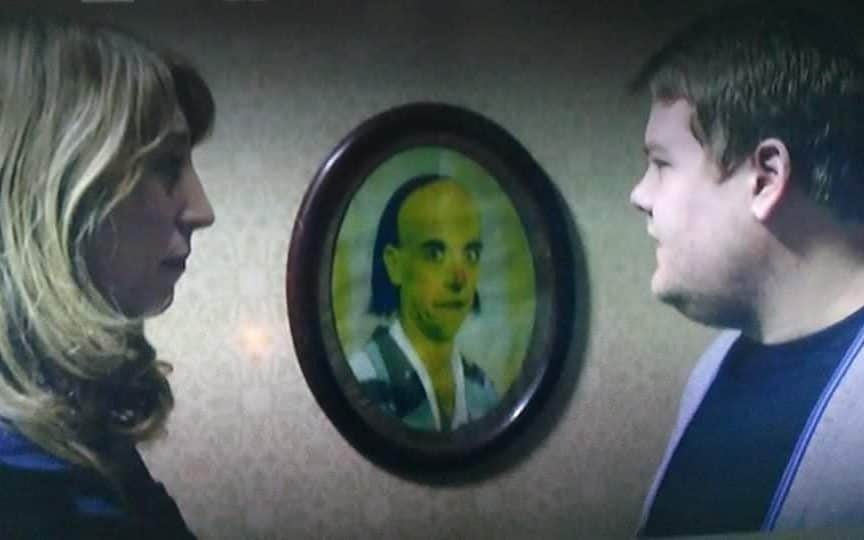
Victorian comedian Dan Leno made an incongruous appearance behind Daisy Haggard and James Corden in a 2010 episode of Doctor Who
Very rarely, a piece of set dressing unintentionally puts itself in the foreground. Back when the BBC made most of its shows at Television Centre, certain items from the stores there inevitably started cropping up repeatedly. A particular late-Seventies tea service – a light-brown affair with a design of sunflowers at the edges – was so frequently used that it became a fixture. A silver spiral staircase was another perennial, popping up in the same week on Blake’s 7 and Top of The Pops.
My only such brush with an odd prop was in a Doctor Who episode I wrote in 2010. The setting – a slightly shabby house divided into flats with a monster lurking upstairs – was realised immaculately. But the set dresser had grabbed a distinctive and eye-catching little print of Victorian music hall comedian Dan Leno, which was unfortunately caught right between two actors in a key scene. Many viewers thought this was intentional, significant, or perhaps a clue to an arcane future plot development. But no. Sometimes – in fact, nearly all of the time – set dressing is just set dressing, and we don’t notice it because it’s so well done.
Source: “AOL Entertainment”
