


Stocks are chasing a rare buy signal as markets brace for a potential Fed hike: Chart of the Day
Stocks are chasing a rare buy signal as markets brace for a potential Fed hike: Chart of the Day

Jared BlikreSat, November 28, 2026 at 12:05 PM UTC
0
One of Wall Street's most famous forecasters, Marty Zweig, made "Don't fight the Fed" a market mantra. He also invented a buy signal with a perfect record, and the two are on a collision course.
Days before the 1987 crash, Zweig told PBS's "Wall Street Week" he didn't like what he saw. His bets against the market paid off.
This week might have caught his attention. The S&P 500 (^GSPC) jumped nearly 6%, its best week since April 2025 and best Thanksgiving week since 2008. Meanwhile, the CBOE Volatility Index (^VIX), Wall Street's fear gauge, sank about 12 points.
It wasn't just Nvidia (NVDA), either. Five NYSE stocks rose for every one that fell Monday, and three in four rose on the S&P 500's best Black Friday since 2007.
That's what Zweig's signal hunts for. The Zweig Breadth Thrust fires when the share of NYSE stocks that are rising, averaged over 10 days, jumps from below 40% to above 61.5% within 10 trading days. Think of a market going from washed out to stampeding back in.
It has fired just 13 times since 1965. Every time, the S&P 500 was higher a year later, by a median 27%, against 10% in a typical year, by Yahoo Finance calculations.
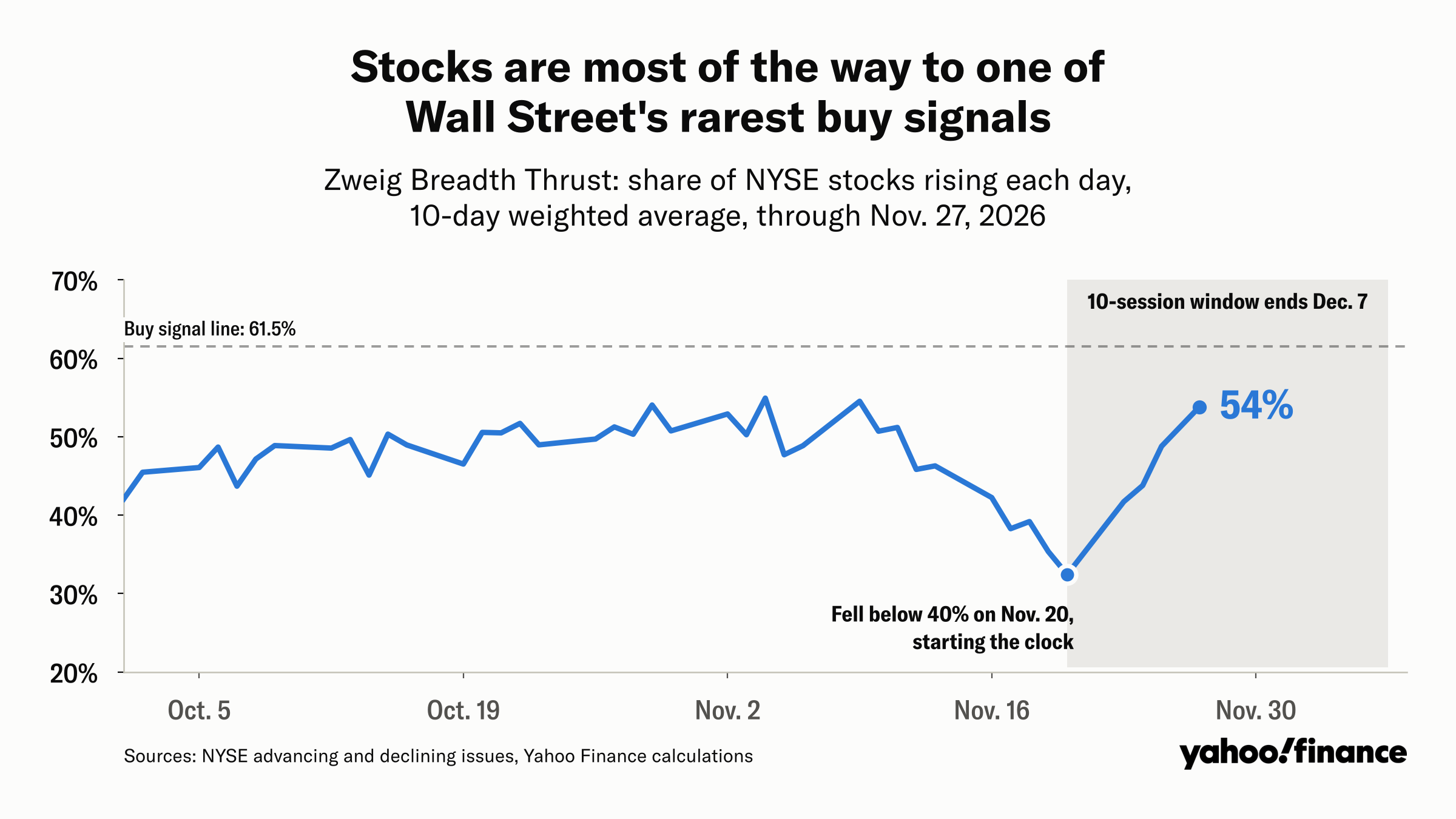
The gauge sank to 32% on Nov. 20 and closed the week at 54%, as Carson Group's Ryan Detrick has been tracking. To fire by Dec. 7, about 65% of NYSE stocks need to rise on an average day for six more sessions.
Don't count on a 14th signal, though. Only 6 of 61 past thrusts this far along have fired, and the misses were followed by a perfectly ordinary year.
Bulls need a string of big days like Monday, not just one. "If you thought that was a real clearing event, you would get multiple days in a row where you can actually get green off of something that is perceived as good," Sherwood News' Luke Kawa said on Yahoo Finance's Market Hang Tuesday.
Advertisement
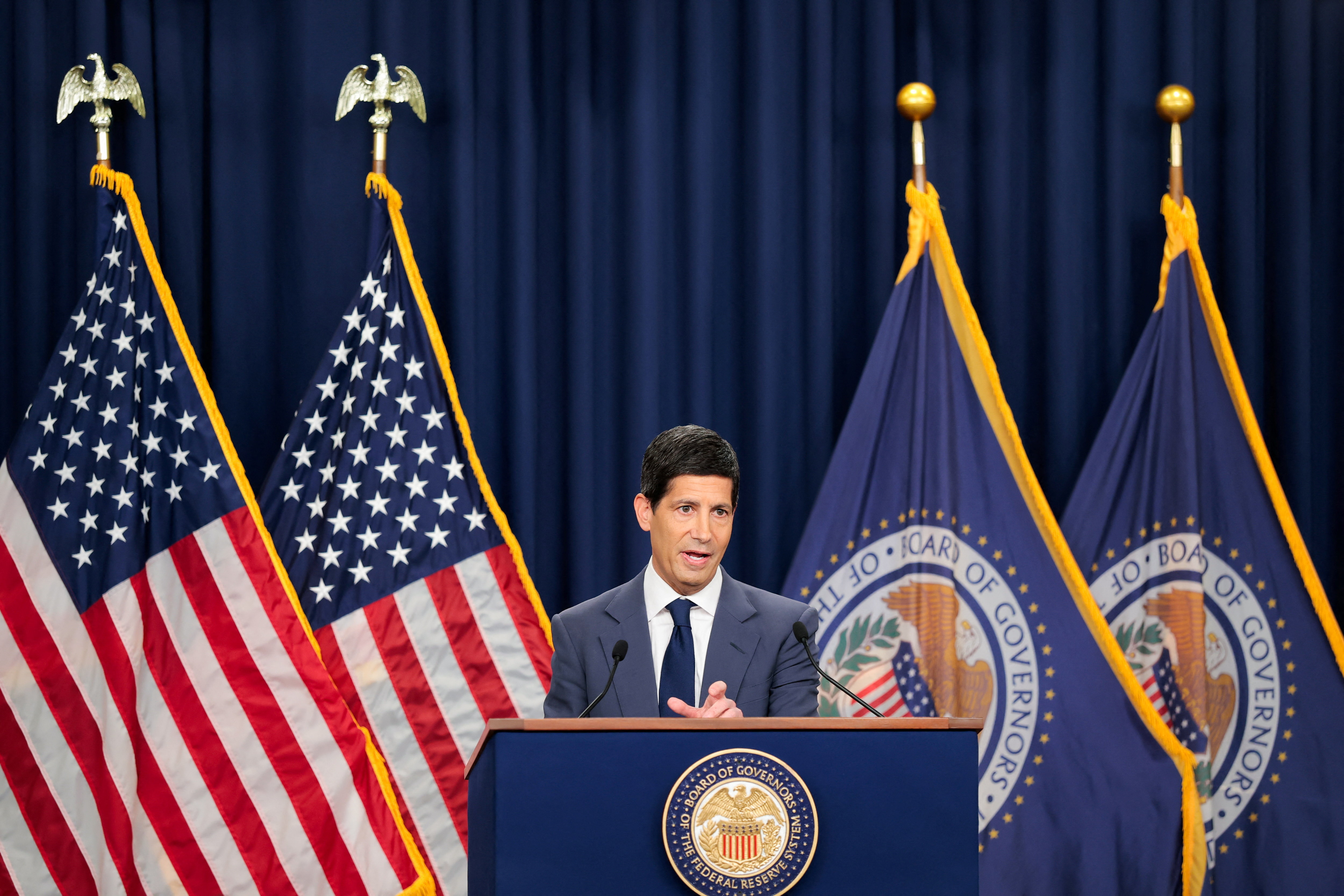
FILE PHOTO: US Federal Reserve Chairman Kevin Warsh speaks at a press conference, following a two-day meeting of the Federal Open Market Committee (FOMC), at the Federal Reserve in Washington, DC, US, October 28, 2026. REUTERS/Kylie Cooper/File PhotoThe Fed gets a vote
The Fed, meanwhile, isn't in a giving mood. It raised rates on Sept. 16 for the first time since 2023, and another hike on Dec. 9, two days after the signal's deadline, is all but certain after its favorite inflation gauge heated up.
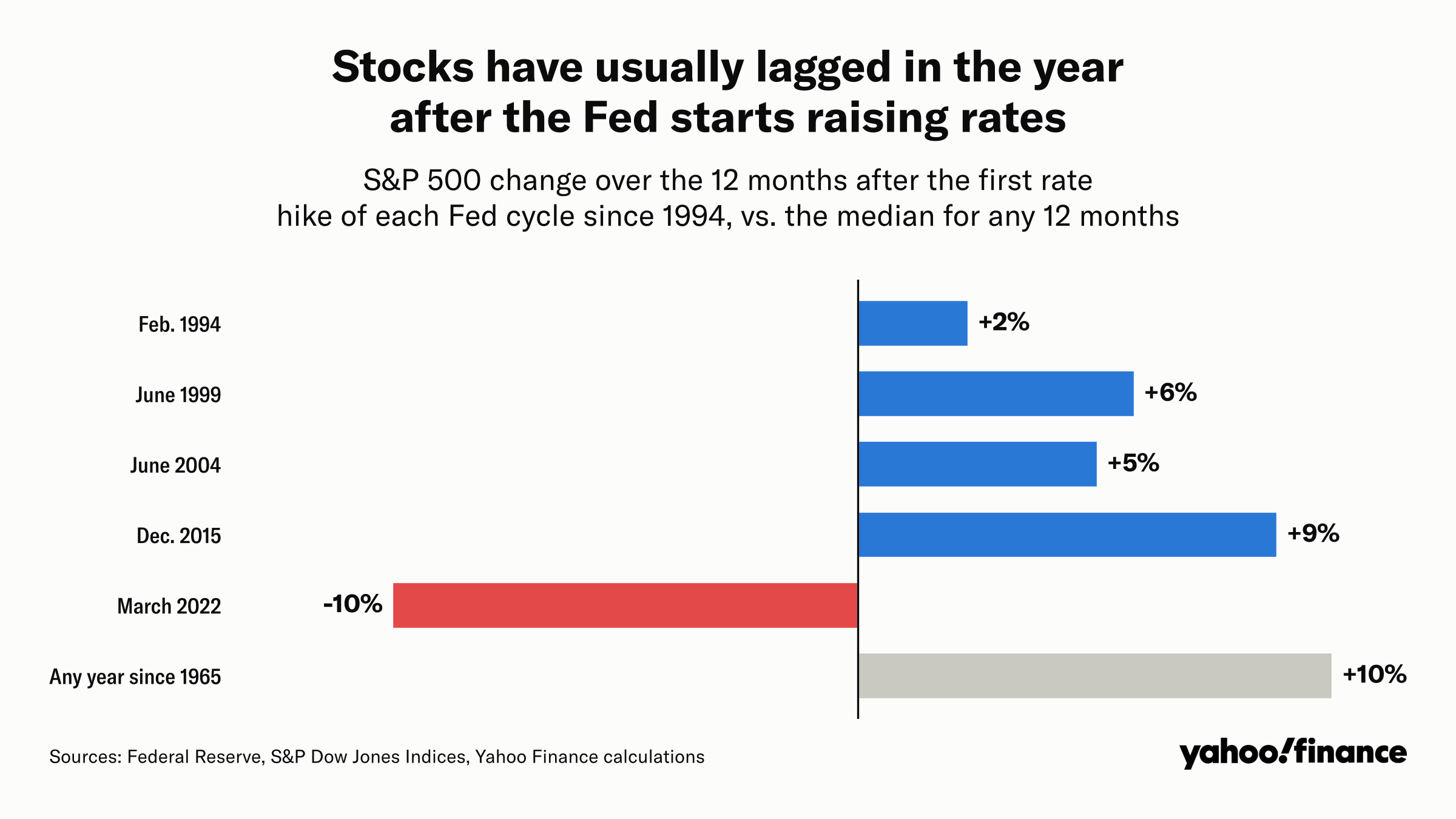
Higher borrowing costs tend to weigh on stocks. Since 1994, the S&P 500 rose a median 5% in the year after the Fed's first hike of a cycle, half a typical year. It's down about 3% since Sept. 16.
Zweig's signal has met the Fed before. Its two weakest years, 2004 and 2015, came months before the Fed started hiking. After its March 2023 signal, with the Fed still hiking, stocks gained 27%.
Nvidia's Jensen Huang testifies before Congress Thursday, and the Fed decides Dec. 9. If the tape and the Fed disagree, Zweig left a tiebreaker.
In his list of trading rules, No. 1 is "The trend is your friend; don't fight the tape." "Don't fight the Fed" comes in at No. 6, with a note attached: "less valid than #1."
Internal AI tools helped analyze interview transcripts, research, and draft this post. Humans reviewed, edited, and fact-checked this post before publication.
Jared Blikre is the global markets and data editor for Yahoo Finance. Follow him on X at @SPYJared or email him at jaredblikre@yahooinc.com.
Click here for in-depth analysis of the latest stock market news and events moving stock prices
Read the latest financial and business news from Yahoo Finance
Source: “AOL Money”
